

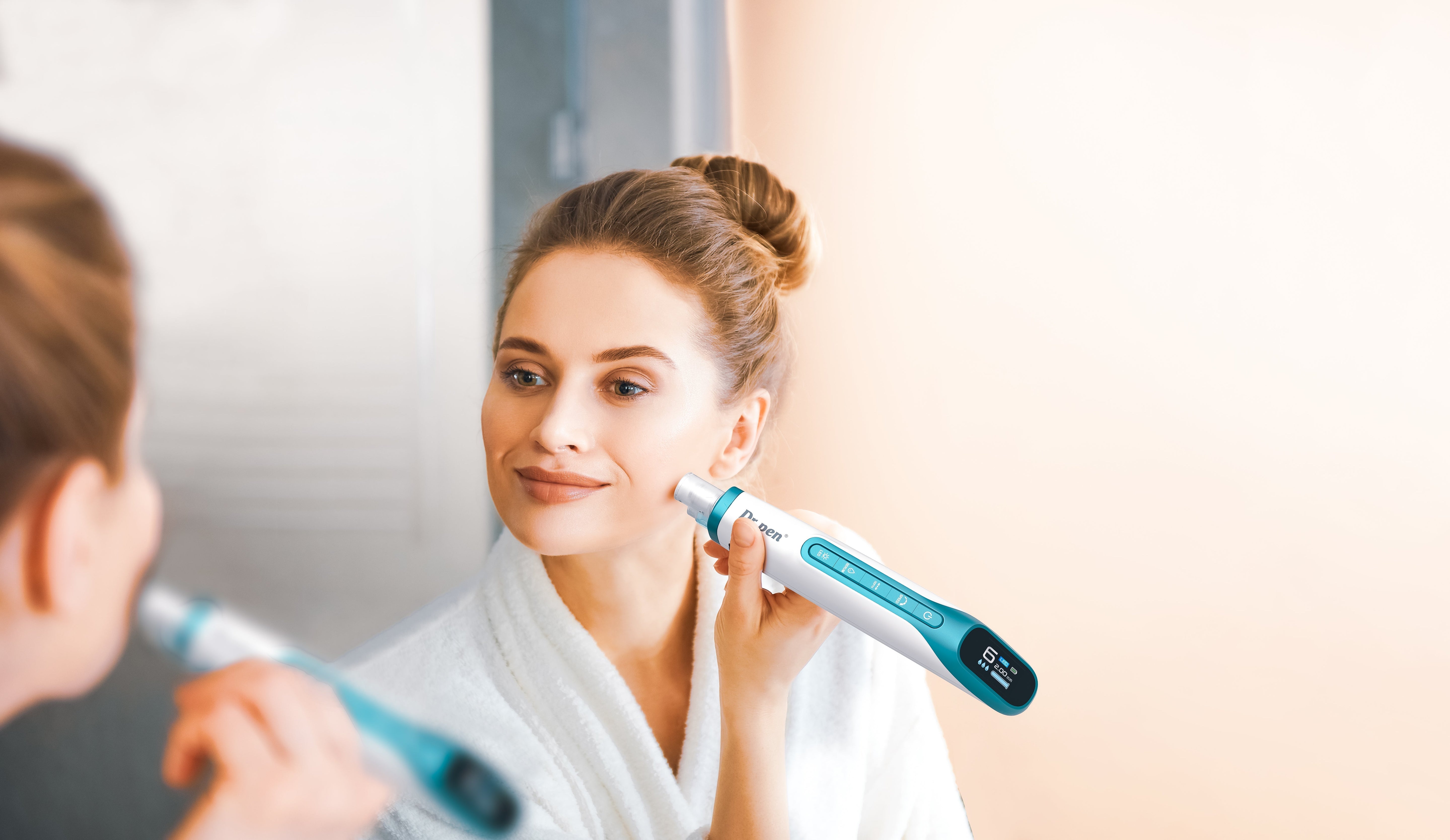
Professional skincare results are no longer confined to the sterile rooms of high-end clinics. Learning how to use Dr Pen at home for beginners has become a transformative skill for individuals seeking to erase acne scars, shrink enlarged pores, and restore youthful elasticity without the recurring salon price tag. While the technology is accessible, the process requires a meticulous balance of hygiene, technique, and patience.
Microneedling—or collagen induction therapy—works by creating thousands of controlled micro-channels in the skin, triggering a natural healing response that boosts protein production. This guide simplifies the technical complexities into a safe, actionable roadmap, ensuring that your first journey into DIY dermatology is both effective and comfortable.
1. Essential Preparation Before Your First At-Home Microneedling Session
Success is determined long before the needles touch your skin. When considering how to use Dr Pen at home for beginners, the first rule is environment control. You must create a "clean zone" by sanitizing a hard surface with 70% isopropyl alcohol and gathering all necessary supplies: your charged Dr. Pen device, a fresh sterile needle cartridge, disposable gloves, and a high-quality hyaluronic acid serum.
Avoid using any active ingredients like Retinol, Vitamin C, or AHAs/BHAs for at least 48 hours prior to the treatment. These potent compounds can increase skin sensitivity and lead to adverse reactions when combined with micro-injuries. Ensure you are in a well-lit area with a clear mirror to avoid any accidental overlapping of the device.
Your facial canvas must be equally prepared. Begin by double-cleansing your skin to remove every trace of makeup, oil, and environmental pollutants. Once dry, many users choose to apply a thin layer of 5% Lidocaine numbing cream, leaving it on for 20 minutes to ensure a painless experience.
After numbing, it is crucial to wipe the skin thoroughly with alcohol or a saline solution to achieve a clinical level of disinfection. Inspect your Dr. Pen microneedling device to ensure the battery is full; a lagging motor can cause the needles to "drag" across the skin rather than enter vertically, which is the most common cause of unnecessary irritation for novices.
2. Step-by-Step Procedure for Operating Your Dr. Pen Microneedling Device
The mechanical execution is where the magic happens. To master how to use Dr Pen at home for beginners, you must understand that the face is a map of varying thicknesses. Start by applying a generous amount of pure hyaluronic acid to the area you are working on to act as a lubricant; never operate the pen on dry skin.
Hold the pen like a pencil, keeping it perpendicular (90 degrees) to the skin surface. Using a "glide and lift" or small, controlled circular motion, move the device across the face in sections. It is best to work in small squares—starting with the forehead, then moving to the cheeks, nose, and finally the chin.
The settings must be adjusted according to the specific facial zone. For the forehead and bridge of the nose, where the skin is thin and sits directly over bone, keep the needle depth between 0.25mm and 0.5mm. On the meatier parts of the cheeks or for stubborn scar tissue, you may safely increase the depth to 1.0mm or 1.5mm.
Avoid the delicate eye socket area and the lips entirely during your first few sessions. The goal is to achieve "erythema"—a uniform pinkish glow—rather than excessive bleeding. Keep the pen moving constantly to ensure an even distribution of micro-channels, and never apply downward pressure; let the motor’s high-speed oscillation do the work for you.
| Facial Area | Beginner Depth | Advanced Depth | Main Focus |
|---|---|---|---|
| Forehead | 0.25mm - 0.5mm | 0.5mm - 0.75mm | Fine lines & Texture |
| Cheeks | 0.5mm - 1.0mm | 1.5mm - 2.0mm | Acne Scars & Pores |
| Nose | 0.25mm | 0.5mm | Enlarged Pores |
| Chin / Jawline | 0.5mm | 1.0mm | Tightening & Scars |
| Upper Lip | 0.25mm | 0.5mm | Smoker's Lines |
3. Post-Treatment Recovery: Hydration, Protection, and Skin Barrier Repair
The 24 to 48 hours following your session are the most critical for cellular regeneration. After you finish the at-home microneedling process, your skin will feel like it has a mild sunburn, and the micro-channels will remain open for several hours. This is the "golden window" for product absorption.
Apply another layer of hyaluronic acid immediately to soothe the heat and lock in moisture. For the first 24 hours, avoid touching your face, sweating, or applying makeup. Wash your face only with lukewarm water—avoid all cleansers—to prevent chemical irritation while the skin barrier is temporarily compromised.
Effective aftercare focuses on three pillars: hydration, repair, and defense. Use a specialized copper peptide or ceramide-based sheet mask to accelerate healing and reduce redness. These ingredients mimic the skin’s natural lipids and help "glue" the barrier back together.
Strict sun protection is non-negotiable. Because microneedling makes your skin exceptionally vulnerable to UV damage, you must stay out of direct sunlight for at least 7 days. Apply a physical (mineral) sunscreen with at least SPF 30 every morning. Physical sunscreens containing zinc oxide are preferred over chemical ones as they sit on top of the skin and are less likely to sting or irritate the newly treated tissue.
4. Elevating Your Skincare Routine: Treatment Cycles for Specific Skin Concerns
Understanding how to use Dr Pen at home for beginners is more than just a one-time event; it is an entry into a long-term skin health strategy. The true power of this technology lies in its cumulative effect. While you might notice an immediate "glow" due to temporary inflammation and increased blood flow, the actual structural changes take time.
Significant improvements, such as the filling of acne scars or the tightening of fine lines, take three to six months to fully manifest as the new collagen fibers mature in the deeper layers of the dermis. Patience and consistency are the ultimate tools in your beauty kit. To achieve the best results, you must tailor your frequency to your specific skin goals.
Specialized Treatment Schedules
Different skin conditions require different "rest periods" to allow for optimal cellular turnover. When you are learning how to use Dr Pen at home for beginners, following a structured plan prevents over-treatment and maximizes the efficacy of each session.
| Skin Concern | Recommended Frequency | Estimated Total Sessions | Expected Results |
|---|---|---|---|
| Dullness & Texture | Every 4 Weeks | 3 - 5 Sessions | Radiant, "Glass Skin" glow |
| Fine Lines & Aging | Every 4 - 6 Weeks | 4 - 6 Sessions | Firmer skin & reduced wrinkles |
| Deep Acne Scars | Every 6 Weeks | 6 - 8 Sessions | Smoother surface & scar filling |
| Hyperpigmentation | Every 4 Weeks | 5 - 7 Sessions | Even skin tone & faded spots |
The Importance of Maintenance
The transition from a beginner to a confident user involves learning to listen to your skin's feedback. Each person’s healing capacity is different; some may be ready for a second session in four weeks, while others with sensitive skin may require eight weeks of rest.
Once you have reached your desired results through an initial intensive cycle, you can move into a maintenance phase. Performing a session once every quarter (3 months) is often sufficient to keep collagen levels elevated and maintain that clinical-grade radiance.
By maintaining a sterile environment, using authentic Dr. Pen replacement cartridges, and focusing on high-quality post-care serums, you are taking full control of your aging process. This DIY approach doesn't just save money—it empowers you to understand the biology of your own skin, leading to a lifetime of confidence from the comfort of your own home.
Visit our website to learn more about Dr. Pen systems, or contact us for expert help. Your ideal skincare device is only a click away.


