

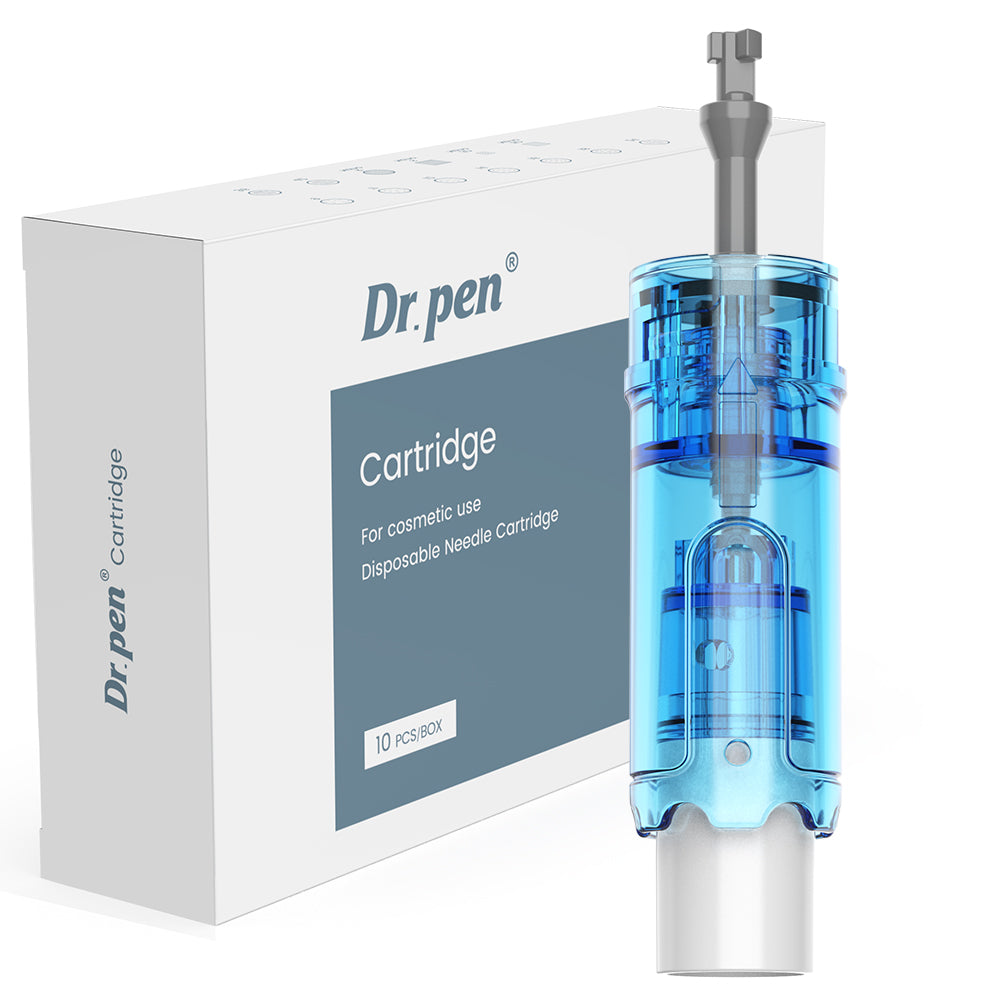
While it is incredibly tempting to buy third-party, "compatible" cartridges to save a few dollars—especially when bought in bulk—the difference between original Dr. Pen needles and generic alternatives is a matter of safety and skin health.
When you are micro-puncturing your face at thousands of rotations per minute, the needle quality determines whether you are safely rebuilding collagen or micro-tearing your skin.
Quick Comparison: Original vs. Compatible
| Feature | Original Dr. Pen Cartridges | Compatible / Generic Cartridges |
|---|---|---|
| Material Quality | Surgical-grade stainless steel or titanium; uniform and ultra-sharp. | Variable steel quality; prone to microscopic burrs or blunt tips. |
| Sterilization | Verified Ethylene Oxide (EO) gas sterilized; medical-grade individual packaging. | Inconsistent quality control; packaging may not be truly sterile. |
| Anti-Backflow | Built-in high-quality membrane to block fluids from entering the pen. | Often lacks a membrane or uses cheap silicone that leaks. |
| Fit & Stability | Perfect locking mechanism; zero wiggling during high-speed oscillation. | Can wobble or jam, causing uneven puncture depths and motor strain. |
| Authenticity Check | Includes a scratch-off security seal to verify on drpen.com. |
None. Sold under generic or randomized factory names. |
The 3 Major Hidden Risks of "Compatible" Needles
1. Microscopic Burrs and Skin Tearing
Under a microscope, the difference between genuine and generic needles is striking. Original Dr. Pen needles are perfectly tapered, ultra-sharp, and straight.
Generic needles often suffer from poor manufacturing quality control, resulting in tiny bent tips or microscopic burrs. When a blunt or hooked needle hits your skin at high speed, it doesn't create a clean micro-channel; it hooks, drags, and tears the skin tissue. This can lead to hyperpigmentation, permanent scratching tracks, and scabbing.
2. The Danger of Fluid Backflow
Newer original Dr. Pen cartridges (like those for the M8, M8S, and A6S) feature a specialized anti-backflow design or silicone membrane. This stops blood, lymph fluid, and serums from traveling backward up into the needle housing and into the device's motor.
Many compatible cartridges skip this internal membrane entirely to cut costs. If fluids leak into the machine, it creates a breeding ground for bacteria inside the pen that cannot be cleaned out, turning your expensive device into a major contamination hazard for future sessions.
3. Depth Instability and Machine Wobble
Original cartridges are engineered to lock flawlessly into the specific bayonet or screw-mount of their designated pen. Compatible cartridges are often manufactured as "one-size-fits-many," meaning the plastic tolerances are slightly off.
If a cartridge wobbles even a fraction of a millimeter while the pen is vibrating at high speeds, the needle depth becomes completely unstable. You might set your pen to a safe 0.5 mm, but a loose generic cartridge could cause the needles to slice horizontally or plunge deeper than intended.
When you are micro-puncturing your face at thousands of RPMs, the cartridge is just as important as the device itself. Saving a few dollars on generic, compatible needles isn’t worth the risk of microscopic skin tearing, device cross-contamination, or unpredictable needle depths. Your skin barrier is irreplaceable—always stick to authentic Dr. Pen cartridges to ensure a safe, precise, and effective treatment.


