

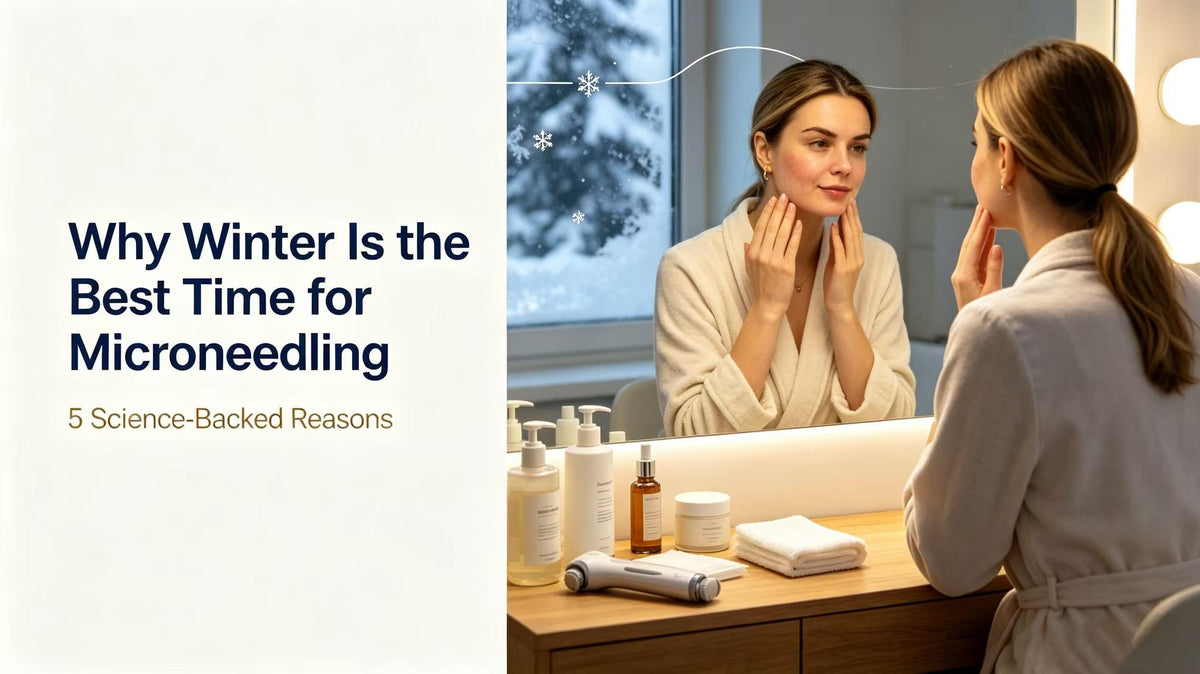
When the temperature drops and the days grow shorter, most people shift their skincare routines toward heavy moisturizers and indoor hibernation. However, dermatologists and aesthetic professionals agree on one well-kept secret: winter is officially the prime season for skin rejuvenation.
If you have been thinking about trying microneedling (also known as Collagen Induction Therapy) to fade acne scars, smooth fine lines, or tighten enlarged pores, waiting until spring or summer could actually make your recovery harder.
Here are five science-backed reasons why booking—or starting—your microneedling treatments during the colder months delivers safer, faster, and more visible results.
1. Significantly Lower UV Exposure Protects Healing Skin
Microneedling works by creating thousands of controlled micro-channels in the skin’s surface to trigger your body’s natural wound-healing cascade. While this process stimulates fresh collagen and elastin, it also leaves your skin barrier temporarily vulnerable to ultraviolet (UV) radiation.
In the summer, intense UVB rays are at their peak, making post-treatment sun avoidance a daily battle. During winter, the sun sits lower in the sky, resulting in noticeably weaker UVB intensity and shorter daylight hours. With less ambient UV radiation, your newly exposed skin cells face far less oxidative stress while they rebuild.
2. Reduced Risk of Post-Inflammatory Hyperpigmentation (PIH)
One of the biggest concerns with any resurfacing or collagen-induction treatment—especially for medium to deeper skin tones—is post-inflammatory hyperpigmentation (PIH). When healing skin is exposed to heat and UV rays, melanocytes (pigment-producing cells) can go into overdrive, leaving behind stubborn dark spots instead of an even glow.
Because winter brings cooler ambient temperatures and lower UV exposure, melanocyte activity naturally calms down. You can undergo a series of microneedling sessions with a drastically lower risk of triggering unwanted pigmentation or uneven skin tone.
3. "Sweater Weather" Makes Social Downtime Effortless
After a proper microneedling session, it is completely normal to experience 24 to 72 hours of redness, mild swelling, and tightness—similar to a moderate sunburn. In the summer, skipping beach days, outdoor brunches, or pool parties to let your face heal feels like a chore.
Winter naturally aligns with a slower, indoor lifestyle. Cozy nights in, remote workdays, and bundled-up outings make hiding out during your initial 48-hour recovery window completely effortless. Nobody will blink twice if you skip outdoor plans while your skin quietly regenerates.
4. Less Sweat Means Lower Risk of Irritation and Breakouts
Heat and humidity are no friends to freshly needled skin. For the first 48 hours after treatment, those tiny micro-channels remain open, meaning sweat, dirt, and bacteria can easily enter the skin and cause stinging, inflammation, or breakouts.
In the winter, cooler temperatures keep perspiration to a minimum during daily activities. Without constant heat and sweat irritating your sensitized skin barrier, your recovery stays cleaner, calmer, and much more comfortable.
5. Plenty of Time to Complete a Full Series Before Spring
True collagen remodeling does not happen overnight. While you will notice a fresh "glow" within a week of your first treatment, structural improvements—like softening deep acne scars or tightening lax skin—typically require a series of 3 to 6 sessions spaced 4 to 6 weeks apart.
Starting your microneedling journey in late autumn or winter gives your skin the full 3 to 4 months it needs to build new, healthy collagen networks behind the scenes. By the time spring arrives and you are ready to go makeup-free, your results will be at their peak.
6. Quick Tips for Winter Microneedling Aftercare
While winter provides the ideal environment for microneedling, cold outdoor air and indoor heating can quickly dehydrate healing skin. Follow these three rules to maximize your glow:
-
Double Down on Hydration: Your micro-channels absorb topical ingredients up to 80% more effectively right after treatment. Stick to pure, fragrance-free Hyaluronic Acid and barrier-repairing Ceramides to lock in moisture.
-
Pause Harsh Actives: Keep retinoids, AHAs/BHAs, and high-concentration Vitamin C off your skin for at least 5 to 7 days post-treatment to prevent dryness and irritation.
-
Never Skip Sunscreen: Even on cloudy winter days, UVA rays penetrate clouds and glass. Apply a broad-spectrum SPF 30 or higher every morning once your skin barrier has closed (usually 24 hours post-procedure).
Ready to Start Your Winter Skin Reset?
Do not wait until sunny weather returns to address stubborn texture, fine lines, or scarring. Take advantage of the cooler months to invest in long-term collagen health—your spring skin will thank you.


