

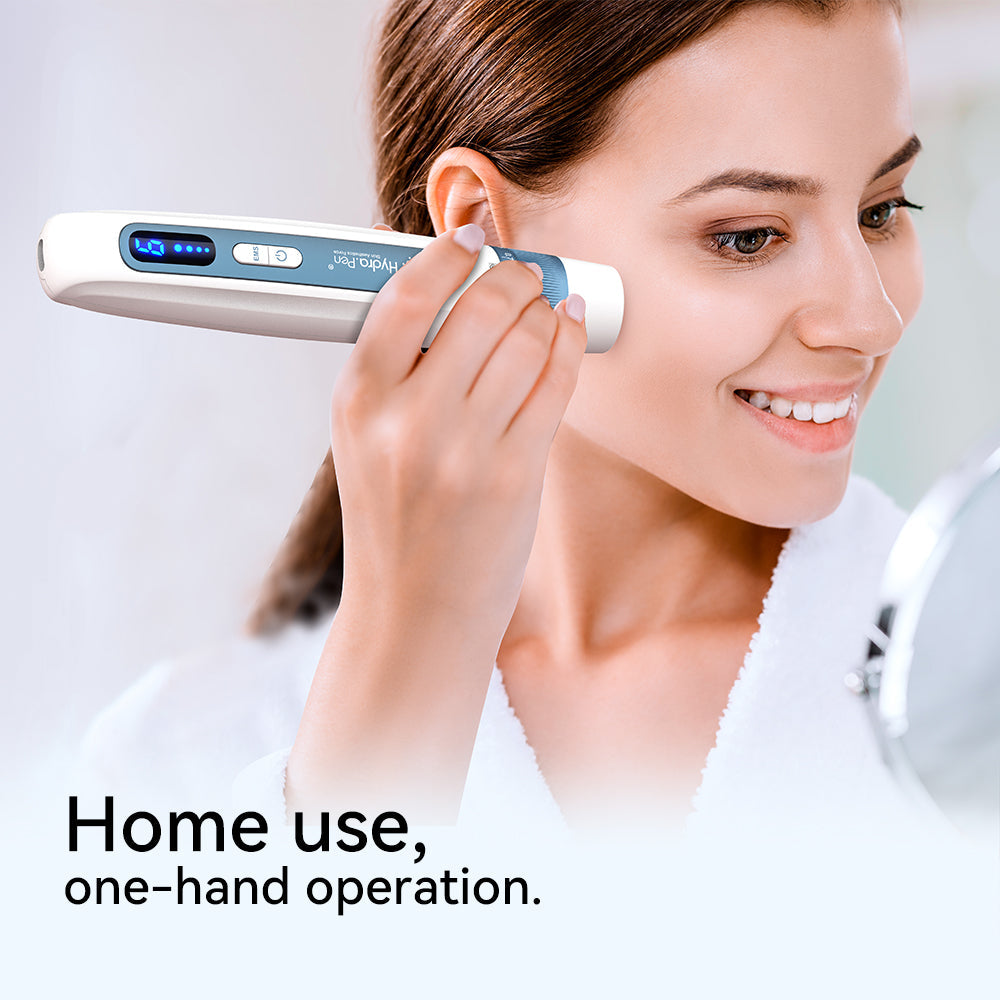
As microneedling technology advances, devices like those from Dr. Pen have become essential tools for at-home and professional skincare. If you are looking into the Dr. Pen Hydra Pen H5, you might be curious about its distinct red and blue lights. Here is an expert guide to understanding how this device works and what those lights truly mean for your skin.
About Dr. Pen Hydra Pen H5
The Dr. Pen Hydra Pen H5 is an innovative microneedling and serum-infusion device. Unlike standard dermapens, the H5 features a built-in reservoir that automatically dispenses your favorite serums during treatment.
A key clinical upgrade to the H5 is the integration of EMS (Electrical Muscle Stimulation) microcurrent technology. This feature stimulates facial muscles, promotes cellular ATP production, and drastically enhances the absorption of skincare nutrients.
Red Light vs. Blue Light: Understanding the Difference
Many users confuse the indicator lights on the H5 with built-in LED phototherapy (which is featured on other models like the Bio Pen Q2 or Hydra Pen H6). On the Hydra Pen H5, the lights serve as operational and functional indicators on its digital display.
However, if we look at the underlying dermatological science of Red vs. Blue Light Therapy often paired with microneedling devices, they target completely different skin layers:
-
Red Light (630nm Wavelength): Penetrates deeply into the dermis. It stimulates fibroblasts to produce collagen and elastin. Its primary clinical effect is anti-aging, wrinkle reduction, and tissue repair.
-
Blue Light (470nm Wavelength): Operates on the surface layers of the skin. It is highly effective at eliminating acne-causing bacteria (C. acnes). Its primary dermatological effect is acne management, sebum regulation, and calming skin irritation.
Red Light vs. Blue Light: Which One is Better?
From a dermatological standpoint, neither light is universally "better" than the other; it completely depends on your specific skin concerns.
If your goal is to target fine lines, loss of elasticity, and scarring, Red Light is superior due to its deep collagen-boosting properties. Conversely, if you are struggling with active breakouts, oily skin, or post-treatment redness, Blue Light is the better choice due to its antibacterial and anti-inflammatory benefits.
Can You Do Red and Blue Light Therapy at the Same Time?
Yes, clinically speaking, combining red and blue light therapy is highly beneficial and often recommended by dermatologists for comprehensive skin rejuvenation. While the blue light targets surface-level bacteria and calms immediate inflammation, the red light works concurrently beneath the surface to accelerate cellular healing and rebuild the skin matrix. Using them in tandem or alternating sessions offers an optimized, full-spectrum approach to anti-aging and acne prevention.


