

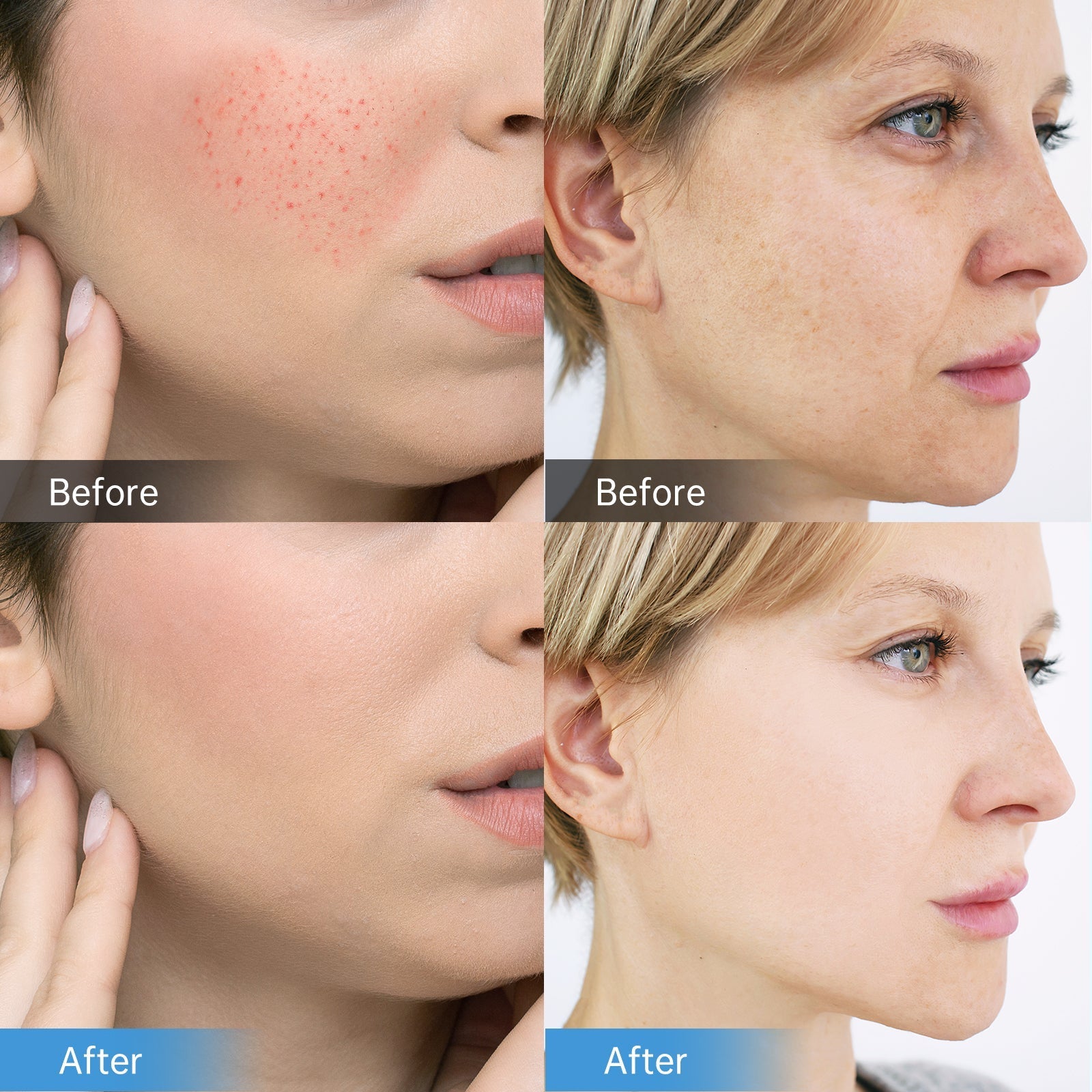
The short answer is yes, but with some very important caveats. While Dr. Pen devices are highly effective at minimizing the appearance of pores, using them on sensitive skin requires a modified approach to avoid causing more harm than good.
Here is a breakdown of how it works, why you need to be careful, and the best way to approach it.
How It Helps "Shrink" Pores
First, a quick reality check: you cannot physically change the genetic size of your pores. However, microneedling makes them look significantly smaller through collagen remodeling.
-
The tiny needles create controlled micro-injuries.
-
Your skin responds by producing fresh collagen and elastin.
-
This plumps and tightens the skin around the pores, compressing them so they look tighter and less noticeable.
The Catch for Sensitive Skin
Sensitive skin has a more vulnerable skin barrier. If you jump straight into standard microneedling at home, you risk triggering severe inflammation, prolonged redness, or even tracking and micro-tears (which can actually make pores look larger).
To do this safely with a Dr. Pen, you should follow a specific protocol:
1. Start with Nano-Needling Instead
Instead of standard needle cartridges (like 12-pin or 36-pin), start with Nano-pin cartridges (often included with models like the Dr. Pen M8S or A6S).
-
Nano-needles do not pierce the skin deeply; they vibrate on the surface to increase product absorption and gently stimulate cell turnover.
-
This provides a safer, zero-downtime way to smooth skin texture and tighten pores without triggering a sensitive skin flare-up.
2. Keep the Depth Shallow
If you eventually transition to actual microneedling, keep the needle depth between 0.25 mm-0.5 mm for the face. Do not go deeper at home. Sensitive skin does not tolerate deep trauma well, and shallow depths are perfectly adequate for targeting pores and texture.
3. Use the Right "Glide" Serum
Never microneedle on dry skin, and do not use active ingredients (like Vitamin C, Retinol, or Exfoliating Acids) during or immediately after the treatment.
-
Only use pure Hyaluronic Acid. It acts as a safe lubricant so the Dr. Pen glides smoothly without dragging, while pulling intense hydration into the skin.
4. Absolute Cleanliness is Non-Negotiable
Sensitive skin is highly prone to infection and reactive breakouts. Always use a brand-new, sterile cartridge, thoroughly double-cleanse your face, and disinfect the pen area.
When to Avoid It
Do not use a Dr. Pen if your sensitive skin is currently experiencing:
-
An active rosacea flare-up
-
Eczema or psoriasis patches
-
Active, inflamed acne breakouts
-
Sunburn
Conclusion
A Dr. Pen can absolutely help refine your pores, but if your skin is highly reactive, it is best to consult a dermatologist first. If you try it at home, stick to Nano-needling or very low needle depths (0.25 mm) to keep your skin barrier happy.


